Island Infusion Med Spa

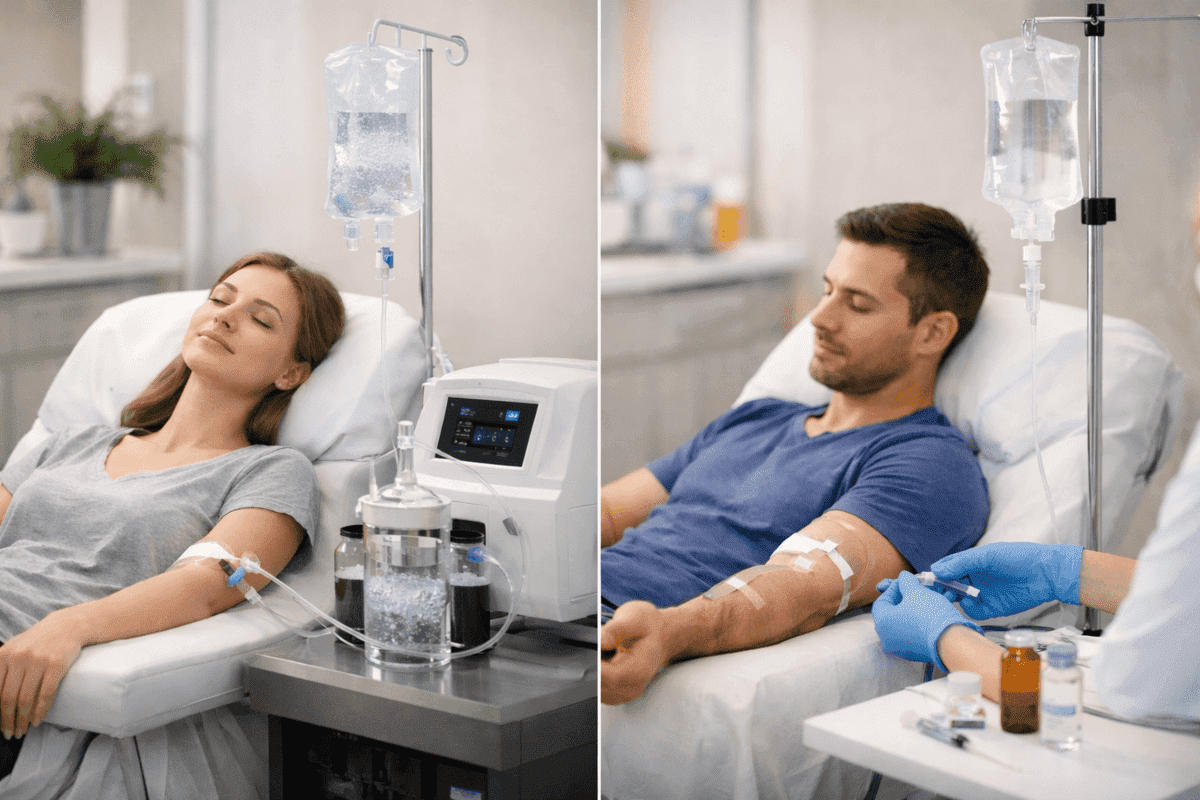
Side-by-side comparison of a patient receiving ozone therapy vs traditional IV therapy

Ozone Therapy vs. Traditional IV Therapy: What Is the Difference?

You have probably come across both ozone therapy and IV drip therapy while researching wellness options, and if you are trying to figure out which one makes sense for you, the comparison can feel confusing. Both involve an IV line. Both are offered at integrative wellness clinics. Both promise meaningful benefits. So what actually sets them apart?

The answer comes down to mechanism, purpose, and what your body actually needs. This guide breaks down ozone therapy vs IV therapy across every relevant dimension so you can make an informed decision before your first appointment. 

What Is Traditional IV Therapy?

Traditional IV therapy, also called IV drip therapy or IV nutrient therapy, delivers vitamins, minerals, amino acids, antioxidants, and fluids directly into your bloodstream through an intravenous line. The key advantage over oral supplements is absorption. When nutrients bypass the digestive system, the body can use 100 percent of what is delivered rather than a fraction of what survives digestion.

Common IV therapy formulas include vitamin C, B vitamins, magnesium, zinc, glutathione, and amino acid blends. Different formulas are designed for different goals, such as energy support, immune function, hydration, athletic recovery, or skin health. You can learn more about the range of options available through IV drip therapy and injections.

Traditional IV therapy is generally considered straightforward, well-tolerated, and familiar to most people since the delivery method is the same as a standard hospital IV. 

What Is Ozone Therapy?

Ozone therapy is an oxidative therapy that uses ozone (O3), a highly reactive form of oxygen, to trigger biological responses in the body. The most common delivery method in wellness settings is major autohemotherapy, where a small amount of your own blood is drawn, mixed with medical-grade ozone, and reinfused through an IV.

Unlike IV nutrient therapy, ozone therapy does not deliver specific nutrients. It works by generating a controlled oxidative stimulus that activates the immune system, increases antioxidant enzyme production, and improves oxygen utilization at the cellular level. The therapeutic effect comes from how your body responds to the ozone, not from the ozone remaining in your system.

Ozone therapy is often combined with ultraviolet blood irradiation (UVB) in an O3UV therapy session, which adds an antimicrobial and immune-enhancing effect to the oxidative benefits.

How They Work Differently in the Body

This is the most important distinction between ozone therapy vs IV therapy: one delivers substances, the other delivers a stimulus.

Traditional IV therapy works by supplementing. Your body receives nutrients it may be deficient in or needs in higher concentrations than diet or oral supplements can realistically provide. The benefit is direct, predictable, and tied to the specific compounds infused.

Ozone therapy works by activating. It does not add anything your body keeps permanently. Instead, it triggers adaptive responses, immune activation, antioxidant upregulation, and improved red blood cell oxygen-carrying efficiency. The benefit comes from the biological cascade your body generates in response.

A useful analogy: IV therapy is like filling a gas tank. Ozone therapy is like tuning the engine so it burns fuel more efficiently.

Both approaches have genuine value. They simply operate through different pathways. 

What Each Therapy Is Best For

Traditional IV Therapy Is Typically Used For:
  • Acute dehydration and recovery
  • Fatigue from nutrient deficiencies
  • Immune support during illness or high-stress periods
  • Athletic performance and post-workout recovery
  • Hangover relief and rapid rehydration
  • Skin health goals (particularly glutathione drips)
  • General wellness maintenance
Ozone Therapy Is Typically Explored For:
  • Chronic inflammation and inflammatory conditions
  • Immune dysregulation or recurring infections
  • Chronic fatigue that has not responded to nutrient support alone
  • Post-viral fatigue and long-term recovery support
  • Circulation and oxygenation concerns
  • Complementary support alongside conventional treatment for chronic conditions

According to a review in the International Journal of Molecular Sciences, ozone therapy has demonstrated meaningful therapeutic potential across immune modulation, antimicrobial activity, and oxidative stress management, areas that go beyond what nutrient delivery alone addresses. 

Side-by-Side Comparison

Feature Traditional IV Therapy Ozone Therapy
Primary mechanism Nutrient delivery Oxidative activation
Uses your own blood No Yes (autohemotherapy)
Targets deficiencies Yes No
Immune activation Indirect Direct
Antimicrobial effect Depends on formula Yes
Session length 30 to 60 minutes 45 to 75 minutes
Typical use case Acute recovery, energy, hydration Chronic conditions, immune support, inflammation
Can be combined Yes Yes 

Can You Use Both Ozone Therapy and IV Therapy?

Yes. Combining ozone therapy and traditional IV therapy is not only safe for most healthy adults, it is a strategy many practitioners recommend for comprehensive wellness support. The two approaches complement each other well because they work through different mechanisms.

For example, a session of blood ozone therapy improves your cells’ ability to utilize oxygen and activates immune responses. Following that with a nutrient IV that includes B vitamins and glutathione gives your cells the raw materials they need while they are operating at heightened efficiency.

Research published in a review of integrative ozone applications supports the idea that combining oxidative therapies with nutritional support can produce outcomes that neither achieves as effectively on its own.

If you are interested in what a combined approach looks like in practice, this overview of combining O3UV and IV nutrient therapy covers the details. 

How to Decide Which Is Right for You

Here is a simple framework for thinking through the ozone therapy vs IV therapy question.

Choose traditional IV therapy if:

  • You want targeted nutrient support for a known deficiency
  • You are dealing with acute dehydration or post-illness recovery
  • You are new to IV-based wellness and want to start with a well-understood approach
  • Your primary goals are energy, hydration, or skin health

Consider ozone therapy if:

  • You have been dealing with chronic fatigue that has not improved with conventional approaches
  • You are managing a chronic inflammatory condition
  • You have recurring infections or a sense that your immune system is not functioning optimally
  • You are interested in whole-body oxidative support that goes beyond nutrient supplementation

Consider both if:

  • You want a comprehensive approach that addresses nutrient status and immune activation together
  • You are working with a practitioner to build a longer-term wellness protocol

Neither therapy replaces medical treatment for diagnosed conditions. Both are complementary approaches that support overall wellness and are best used as part of a broader health strategy. 

FAQ

Is ozone therapy more expensive than IV therapy?

Ozone therapy sessions are generally priced higher than basic IV drip sessions because the process is more involved, requiring blood draw, ozone generation equipment, and more practitioner time. However, pricing varies significantly by provider and location. Many clinics offer both and can help you evaluate which fits your goals and budget.

Most people notice effects from IV vitamin therapy within hours of a session, particularly in terms of energy and hydration. Ozone therapy results tend to emerge more gradually over a series of sessions as the cumulative immune and oxidative benefits build. However, some patients report feeling notably different after even a single ozone session.

In most cases, yes. Many clinics offer combined appointments. Your provider will assess your individual health status and advise on the best sequencing and combination for your goals.

Both are considered safe when administered properly by trained professionals. Traditional IV therapy has a longer documented history in conventional medicine. Ozone therapy has decades of use internationally and a strong safety record when dosing and delivery protocols are followed correctly.

In most states, including Maryland, you do not need a physician referral to access IV therapy or ozone therapy at a wellness clinic. However, if you are managing a medical condition, it is always advisable to discuss new therapies with your healthcare provider first. 

Not Sure Which Therapy Is Right for You?

When it comes to ozone therapy vs IV therapy, there is no universal right answer. The better choice depends entirely on what your body needs right now. IV nutrient therapy is excellent for targeted deficiency support, rapid rehydration, and acute recovery. Ozone therapy addresses a different layer entirely, working through immune activation, oxidative preconditioning, and systemic oxygenation improvements that nutrient delivery alone cannot replicate.

For many people, the most effective approach is not choosing one over the other but understanding how both can work together as part of a thoughtful wellness strategy. A conversation with a knowledgeable provider is the best way to figure out which starting point makes the most sense for your goals.

A knowledgeable provider can help you map out a plan that fits your needs. Learn more about ozone and IV therapy options to get started.

Disclaimer

This content is for informational purposes only and is not intended to diagnose, treat, cure, or prevent any disease or medical condition. Always consult a qualified healthcare professional before beginning any new therapy. 

Practitioner in blue gloves preparing an IV drip stand for a patient receiving IV drip therapy for energy in a clinical setting

Why Do I Feel So Tired All the Time? How IV Drip Therapy for Energy Works

Why Do I Feel So Tired All the Time? How IV Drip Therapy for Energy Works IV drip therapy for energy has become one of the most sought-after wellness options…
Relaxed patient receiving IV autohemotherapy as part of ozone therapy for inflammation in a wellness clinic room

Can Ozone Therapy Help With Chronic Inflammation? What the Research Shows

Can Ozone Therapy Help With Chronic Inflammation? What the Research Shows Chronic inflammation is one of the most widely discussed health concerns in modern medicine, and for good reason. It…
Young woman eating a fresh salad with vegetables and fruit for an ozone therapy aftercare

What to Do After an Ozone Therapy Session to Maximize Results

What to Do After an Ozone Therapy Session to Maximize Results If someone told you that a little planning after your appointment could meaningfully change what you get out of…
Side-by-side comparison of a patient receiving ozone therapy vs traditional IV therapy

Ozone Therapy vs. Traditional IV Therapy: What Is the Difference?

Ozone Therapy vs. Traditional IV Therapy: What Is the Difference? You have probably come across both ozone therapy and IV drip therapy while researching wellness options, and if you are…
Select the fields to be shown. Others will be hidden. Drag and drop to rearrange the order.
  • Image
  • SKU
  • Rating
  • Price
  • Stock
  • Availability
  • Add to cart
  • Description
  • Content
  • Weight
  • Dimensions
  • Additional information
Click outside to hide the comparison bar
Compare