If you have ever struggled to walk down stairs two days after leg day, you already know what delayed onset muscle soreness feels like. Some people turn to stretching or ice baths for relief. Others are curious about ozone therapy for muscle soreness, a treatment that pairs ozone with ultraviolet blood irradiation. This guide looks at what actually causes post-workout soreness, how this treatment is thought to work, and what the evidence says so far.
1. What Is Delayed Onset Muscle Soreness?
Delayed onset muscle soreness, or DOMS, is the stiffness and tenderness that shows up a day or two after unfamiliar or intense exercise. It is not the same as the burning feeling during a workout. That sensation fades quickly. DOMS builds slowly and usually peaks between 24 and 72 hours after exercise.
According to a classic review published in Sports Medicine, researchers have proposed several competing explanations for DOMS over the years. These include lactic acid buildup, muscle spasm, connective tissue damage, and inflammation. No single theory fully explains it. Most experts now believe a combination of these processes is responsible.
DOMS is most common at the start of a new training season or when trying an unfamiliar activity. It can also show up any time muscles are pushed harder than they are used to, regardless of the time of year.
2. What Causes Soreness After a Hard Workout
Exercises involving lengthening muscle contractions, such as running downhill or lowering a heavy weight slowly, tend to cause more soreness than other types of movement. These contractions create small amounts of stress in the muscle fibers.
This stress sets off a chain reaction in the body:
Microscopic damage occurs in muscle fibers, especially during eccentric movements
The immune system responds with localized inflammation
Fluid and immune cells build up around the affected tissue
Nerve endings become more sensitive, which produces the tenderness associated with DOMS
This process can also temporarily reduce joint range of motion and muscle strength. That is one reason athletes care about recovery, since soreness can affect performance in the days following a hard session. It can also change how a person moves without them realizing it, since muscles compensate for the discomfort by shifting effort to less affected areas. Over time, that compensation pattern can place unusual stress on other muscles, tendons, and joints, which is part of why some coaches encourage a gradual return to full intensity rather than pushing through significant soreness right away.
3. Ozone Therapy for Muscle Soreness: How It Works
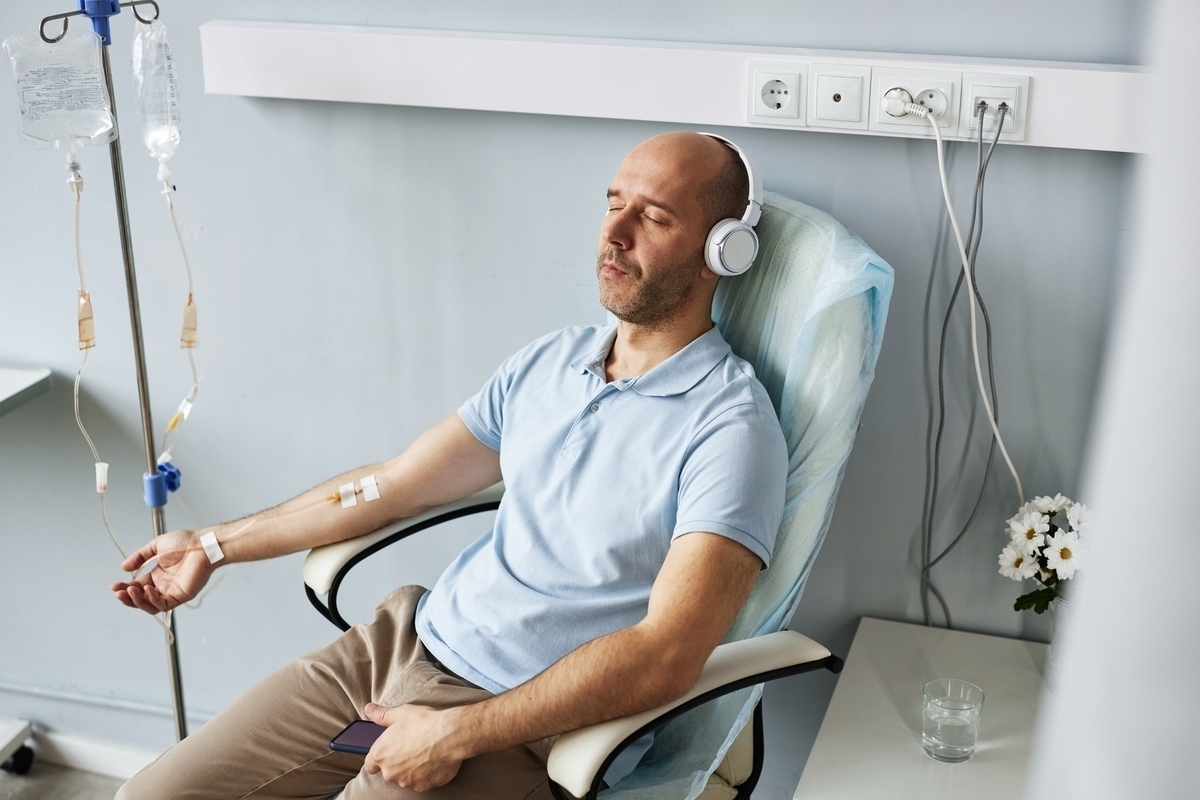
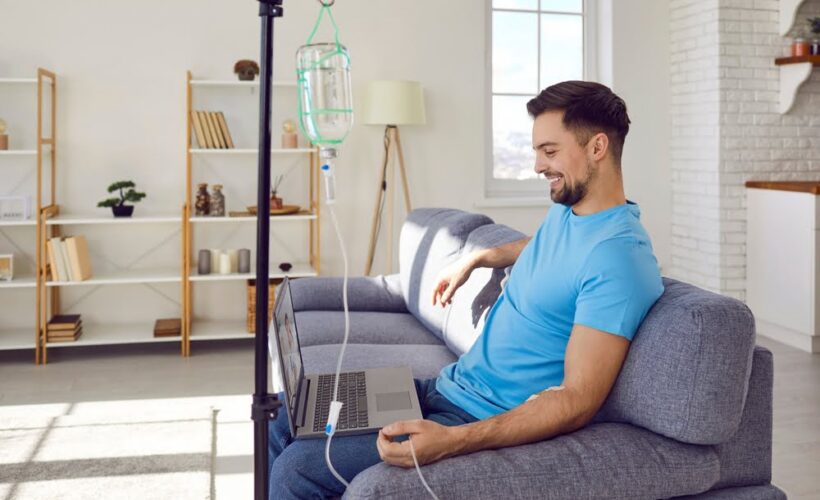
This treatment typically involves drawing a small amount of blood, mixing it with a medical-grade ozone and oxygen blend, and returning it to the body through an IV line. The idea behind this approach is that ozone creates a brief, controlled stress response in the blood.
This controlled stress is meant to prompt the body’s own antioxidant systems to become more active. According to a review on ozone therapy in musculoskeletal medicine, this mechanism has shown pain reduction and improved function in a range of musculoskeletal conditions, including documented cases involving hamstring injuries in professional athletes.
The goal with ozone therapy for muscle soreness is not to numb pain directly. Instead, it aims to support the body’s natural repair and anti-inflammatory processes so soreness resolves more efficiently.
4. How UVB Therapy Adds to the Effect
UVB therapy, also called ultraviolet blood irradiation, is often paired with ozone in the same session. During this part of the treatment, a portion of blood is exposed to ultraviolet light before being returned to the body.
This exposure changes how certain blood components behave. It is thought to support immune signaling and improve the flexibility of red blood cells, which can affect how efficiently oxygen reaches tired muscle tissue. You can read more about what UVB therapy does on its own if you want a deeper look at that half of the treatment.
When combined, ozone and UVB therapy are thought to address inflammation and oxygenation through two separate but related pathways. This combination is the basis for the O3UV ozone and UVB therapy approach offered as a single treatment.
5. What the Research Shows So Far
Most existing research on this topic focuses on ozone therapy generally, rather than muscle soreness in isolation. It is worth being clear about the current state of the evidence.
Separately, a large body of research exists on treatments aimed specifically at DOMS. According to a 2025 systematic review in the Journal of Pain Research, physical therapy modalities such as light-based treatments and sauna use showed measurable benefits within the first 48 hours after exercise, though effects tended to fade beyond that window. This gives a useful benchmark for how recovery treatments are typically studied and measured, even though this particular review did not examine ozone or UVB therapy directly.
Taken together, this suggests ozone therapy for muscle soreness is a plausible, mechanism-based approach that fits within a broader, well-studied category of recovery treatments. It has not yet been the subject of large, dedicated clinical trials specific to athletic soreness.
6. How This Compares to Other Recovery Methods
People managing DOMS have several options, and none of them work identically. A few common approaches include:
Rest and light movement: Gentle activity often helps more than complete rest, though it does not eliminate soreness
Cold therapy: Ice baths and cold water immersion are popular but have shown mixed results in research
Massage and stretching: These can improve comfort temporarily but do not appear to speed up the underlying recovery process
Ozone and UVB therapy: Aims to support the body’s inflammatory and antioxidant response rather than directly numbing discomfort
None of these approaches is guaranteed to work the same way for everyone. Individual response to soreness and recovery treatments varies based on training history, fitness level, and overall health. Soreness that lingers well beyond the usual few days, or that overlaps with ongoing fatigue, is sometimes a sign that recovery needs more consistent support rather than a single fix. This page on ozone and UVB therapy for fatigue looks at that broader pattern in more detail, since soreness and fatigue often show up together during heavy training periods.
7. Who Tends to Consider This Option
People interested in ozone therapy for muscle soreness are usually already familiar with training-related soreness and have tried more conventional recovery strategies first. This tends to include:
Endurance athletes coming off long runs, rides, or training blocks
Strength athletes managing recurring soreness from heavy lifting
Recreational exercisers returning to activity after time off
Anyone whose soreness feels disproportionate to their training load, after ruling out injury with a medical provider
This is not intended as a first response to soreness. Basic recovery habits such as sleep, hydration, and gradual training progression remain the foundation for managing DOMS.
8. What a Session Looks Like
A typical session pairing ozone and UVB therapy takes about 45 to 75 minutes. Blood is drawn, treated with the ozone and oxygen mixture, exposed to ultraviolet light, and returned through an IV line. The O3UV ozone and UVB therapy service page covers this process in more detail if you want a fuller picture of what a visit involves.
Some people notice mild tiredness for a few hours afterward as the body processes the treated blood. This is considered a normal, short-lived response. Because the goal is usually ongoing support rather than a one-time fix, a series of sessions is often recommended rather than a single visit. As with any treatment involving blood draws and IV administration, a review of health history is a standard first step, since certain conditions may make ozone-based treatments unsuitable for a particular person.
9. FAQ
How is ozone therapy for muscle soreness different from a regular ice bath?
Ice baths work by numbing tissue and reducing blood flow temporarily. This treatment works differently, aiming to support the body’s own inflammatory and antioxidant response rather than reducing sensation at the surface.
How long after a workout should this treatment be scheduled?
There is no universal timing rule. Providers typically base scheduling on training history, recovery needs, and overall health rather than a fixed number of hours after exercise.
Does this treatment prevent soreness from happening in the first place?
There is no strong evidence that it prevents DOMS entirely. Most of the reasoning behind this treatment centers on supporting recovery after soreness has already started, not blocking it from occurring.
Is DOMS a sign that a workout was effective?
Not necessarily. Soreness reflects unfamiliar or intense muscle stress, but its absence does not mean a workout had no effect. Fitness can improve without noticeable soreness, especially as the body adapts to a routine.
How many sessions are typically needed?
This depends on training goals and how someone responds to treatment. Some people use it occasionally during heavy training periods, while others try a short series of sessions to see how their body responds before deciding whether to continue.
Muscle soreness is a normal part of training, and most cases resolve on their own within a few days. For people who have already covered the basics of recovery and are still looking for additional support, this approach is one option worth discussing with a provider, alongside realistic expectations about what the current evidence does and does not show.
Key Takeaways
DOMS results from a combination of microscopic muscle stress, inflammation, and increased nerve sensitivity, not a single simple cause. Ozone therapy for muscle soreness is thought to work by prompting a brief, controlled stress response that activates the body’s own antioxidant defenses, while UVB therapy adds effects related to immune signaling and blood cell function. Current evidence supports the general mechanism more than large-scale studies on soreness specifically, so this approach is best treated as a complement to proven recovery basics like sleep, hydration, and gradual training, not a replacement for them.
Curious Whether This Fits Your Recovery Routine?
Soreness affects everyone differently, and what works well for one person’s training load may not fit another’s. If you want to understand whether ozone and UVB therapy could support your recovery routine, a conversation with a qualified provider is the best starting point.
Disclaimer: This content is for informational purposes only and is not intended to diagnose, treat, cure, or prevent any disease or condition. Always consult a qualified healthcare provider before starting any new therapy, especially if you have an existing health condition or injury.
Chen J, et al. Differences in the Effectiveness of Different Physical Therapy Modalities in the Treatment of Delayed-Onset Muscle Soreness. Journal of Pain Research, 2025. https://pmc.ncbi.nlm.nih.gov/articles/PMC12178262/
Anxiety is one of the most prevalent wellness challenges of the modern era, and it is also one of the most biologically complex. While therapy, lifestyle changes, and in some…
Vitamin C is one of the most studied nutrients in human physiology, and yet most people dramatically underestimate what it can do when delivered at concentrations that oral supplementation simply…
Ozone therapy for weight loss is a topic that requires an honest conversation before anything else. If you are looking for a therapy that melts fat without lifestyle changes, this…
If you have been exploring IV therapy options, you have almost certainly come across the Myers Cocktail. It is the most widely recognized IV nutrient formula in integrative medicine, and…